

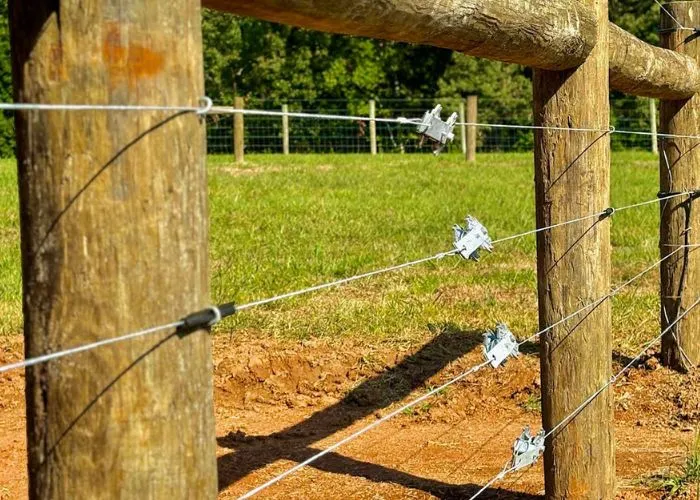
When designing a perimeter protection system, one of the earliest structural decisions you face is choosing between a top-wall electric fence and a free-standing electric fence. While both systems utilize the same underlying electrical principles—delivering a high-voltage, non-lethal pulse via an energizer—their mechanical design, installation requirements, and ideal applications are fundamentally different.
Selecting the wrong setup can lead to structural failures, municipal compliance violations, or compromised security. Below is a comprehensive comparison of top-wall and free-standing electric fences, examining their structural pros and cons, typical use cases, and how to determine which setup matches your property.
1. Top-Wall Electric Fences: Maximizing Existing Masonry
A top-wall electric fence is mounted directly onto the top or inner face of an existing perimeter boundary—such as a stone wall, brick wall, precast concrete barrier, or reinforced palisade fence. Rather than serving as the primary physical barrier, the masonry or metal wall stops casual access, while the electric fence bracket and wire array add vertical height and active intrusion deterrence.
Anatomy of a Top-Wall Setup
- Brackets: Fabricated from hot-dip galvanized steel, powder-coated steel, or aluminum. Profiles include straight, inward-angled, outward-angled, or Y-shaped brackets designed to carry between 6 and 12 wire strands spaced roughly 100mm apart.
- Anchoring: Bolted securely into the top of the wall using heavy-duty masonry anchor bolts (rawl bolts) or chemical studs.
- Wiring Configuration: Because urban masonry walls and concrete blocks provide dry insulation against the earth, top-wall security fences almost always utilize Earth-Return (alternating live and grounded wires) configurations to guarantee a full shock regardless of an intruder’s footwear or wall dryness.
Advantages of Top-Wall Fences
- Leverages Existing Infrastructure: Utilizes boundaries you already own, saving the cost of building a brand-new perimeter frame from scratch.
- Space Efficient: Sits entirely within your property line atop the wall, consuming zero additional ground footprint.
- Urban Aesthetic: Cleanly integrates with residential and commercial architecture, offering a modern security look without the industrial appearance of full-height security compounds.
- Dual-Layer Protection: Intruders must first defeat or scale the heavy masonry wall and navigate a high-voltage, monitored wire array equipped with cut-detection sensors.
Limitations of Top-Wall Fences
- Relies on Wall Structural Integrity: If the underlying brick or precast wall is weak, cracked, or poorly built, the pulling tension of high-tensile fence wires can warp brackets or pull anchor bolts loose over time.
- Height Restrictions: Subject to strict municipal zoning laws governing maximum total compound height (wall + electric fence combined).
2. Free-Standing Electric Fences: Complete Boundary Independence
A free-standing electric fence is built entirely from scratch as an independent barrier, without relying on any pre-existing wall or structure for support. It utilizes its own dedicated corner strain posts, intermediate line posts, tensioners, and wire arrays spanning from ground level upward.
Free-standing fences range from lightweight, portable polywire paddocks used in rotational cattle grazing to heavy-duty, 2.5-meter-tall perimeter security barriers protecting industrial estates, solar farms, airports, and wildlife reserves.
Anatomy of a Free-Standing Setup
- Corner & End Strain Posts: Heavy timber, concrete, or galvanized steel posts concreted deep into the ground (60cm to 90cm deep) to absorb the massive longitudinal tension of tightened wires.
- Intermediate Line Posts: Lighter stakes (fiberglass, Y-standards, or steel tubing) spaced every 3 to 6 meters to keep wires at uniform heights.
- Wire Array: Can feature anywhere from 3 strands (for cattle) to 15+ strands (for high-security industrial perimeters or game exclusion).
Advantages of Free-Standing Fences
- Total Layout Flexibility: Can be installed anywhere—across open acreage, uneven terrain, rocky hillsides, or vacant plots lacking boundary walls.
- No Wall Dependency: Eliminates concerns about cracking fragile masonry walls or dealing with precast concrete structural limits.
- Superior Animal and Wildlife Containment: Can be designed from ground level up to prevent burrowing underneath (using low offset wires) or jumping over (using multi-meter heights), making them the gold standard for agriculture and conservation.
- Scalable Height: Easily engineered to 2 meters, 2.5 meters, or higher to match rigorous industrial security specifications.
Limitations of Free-Standing Fences
- Higher Installation Labor and Earthwork: Requires augering holes, mixing concrete, setting heavy strain posts, and clearing a wider ground footprint.
- Vulnerability to Vegetation: Because live wires run much closer to the ground (or touch the ground on lower strands), weed control and vegetation management require more consistent attention than elevated wall-top systems.
Head-to-Head Comparison: Top-Wall vs. Free-Standing
| Evaluation Criteria | Top-Wall Electric Fence | Free-Standing Electric Fence |
| Primary Environment | Urban residential homes, commercial estates, gated communities | Farms, ranches, industrial parks, solar plants, open acreage |
| Foundation Requirement | Existing stone, brick, or precast boundary wall | Dedicated corner footings and concreted support posts |
| Height Flexibility | Limited by wall height and municipal zoning codes | Highly flexible (can be built from ground level up to 3m+) |
| Ground Footprint | Zero (mounted directly above existing walls) | Requires a dedicated cleared corridor (0.5m–1m wide) |
| Best Used For | Human intrusion deterrence and property security | Perimeter security, livestock control, and wildlife exclusion |
| Wiring Style | Typically Earth-Return (Alternating live/earth) | Can be All-Live (soil return) or Earth-Return |
Key Factors When Choosing Your Perimeter Setup
To decide which setup best fits your property, evaluate four practical criteria:
- What is Already on Site? If your property is already enclosed by a sturdy masonry or concrete wall, a top-wall installation is almost always faster, more cost-effective, and aesthetically aligned with urban standards. If you own an open plot, farm, or industrial compound without walls, a free-standing fence is mandatory.
- Review Local Municipal and Zoning Laws: City planners frequently regulate perimeter heights. In many urban neighborhoods, local bylaws dictate that any electric fence must sit entirely inside your property boundary and maintain a minimum clearance height above the public footpath (commonly 1.8 meters minimum). Always check local regulations before erecting free-standing fences near public property lines.
- Analyze Your Threat Profile: Are you protecting against urban burglars looking to scale a wall, or are you containing livestock, keeping out agricultural predators, or securing a remote industrial yard? Wall-top fences excel at stopping human climbers, while free-standing fences excel at managing ground-level entry and animal containment.
- Consider Maintenance Access: Free-standing fences require a clear maintenance path on both sides of the fence to trim grass and inspect lines. If your boundary abuts a neighbor’s wall tightly, a top-wall system accessible entirely from your own side is the only practical solution.