Michael Caine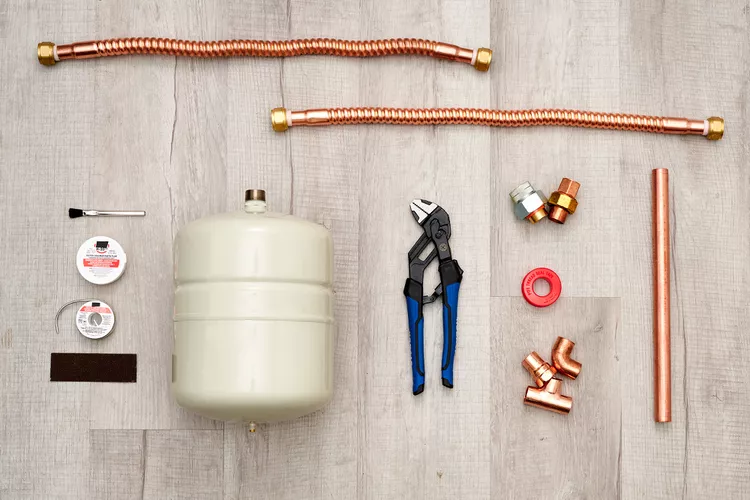
Water expands as it is heated, and that extra volume needs somewhere to go. Expansion tank basics become important in plumbing systems where heated water cannot easily move backward through the incoming supply.
A correctly installed expansion tank gives that temporary increase in volume a controlled space, helping stabilize pressure around the water heater and connected plumbing.
Why Heated Water Can Raise Pressure
A tank-style water heater repeatedly warms a fixed quantity of water. As the temperature rises, the water occupies slightly more space.
In an open system, some expansion may move back toward the supply. In a closed system, check valves, backflow devices, or pressure regulators can prevent that movement.
The Tank Acts Like a Small Pressure Buffer
A typical expansion tank contains water on one side and compressed air on the other, separated by a flexible membrane. As water volume increases, the membrane moves and compresses the air.
Pick a Location That Can Be Serviced
Expansion tanks are commonly installed on the cold-water side of the water-heating system according to the applicable installation requirements and manufacturer instructions.
Homeowners finishing nearby mechanical spaces sometimes consider decorative wall inspiration while keeping the tank, valves, and piping fully reachable for future inspection.
The tank should also have appropriate physical support rather than placing avoidable stress on nearby pipework.
Match the Tank to the Plumbing System
Expansion tank selection depends on system conditions rather than appearance alone. Water-heater capacity, supply pressure, and the tank manufacturer’s sizing guidance all influence the choice.
During utility-room remodeling, interior layout inspiration can help organize storage and finished surfaces around plumbing equipment without obstructing service access.
| Factor | Why It Matters | What to Check |
|---|---|---|
| Heater capacity | Affects expansion volume | Water-heater size |
| Supply pressure | Influences tank setup | Measured cold pressure |
| Tank size | Determines usable capacity | Manufacturer chart |
| Air charge | Affects performance | Installation instructions |
Watch the Tank as It Ages
An expansion tank is not a lifetime component. The internal membrane can eventually fail, the air charge can change, or corrosion can develop around fittings.
People creating longer-term maintenance plans may combine plumbing work with other residential planning inspiration so utility-room inspections become part of normal household upkeep.
A tank that becomes waterlogged may no longer provide the intended pressure cushion.
What Homeowners Commonly Misunderstand
An expansion tank does not repair every pressure problem. Excessive incoming street pressure, a failing pressure regulator, blocked plumbing, or a malfunctioning water heater may require different attention.
Another common assumption is that simply adding a larger tank is always better. Sizing should reflect actual system conditions. Installation details, pressure settings, and connection location matter more than buying the biggest tank that fits.
Frequently Asked Questions
Does an expansion tank increase water pressure?
Its purpose is not to boost normal fixture pressure. It provides space for thermal expansion so pressure does not rise unnecessarily as stored water heats.
How can you tell if an expansion tank has failed?
Possible clues include abnormal pressure behavior, leakage, corrosion, or a tank that has lost its intended air cushion. Proper testing is more reliable than appearance alone.
Is an expansion tank needed with every water heater?
Not necessarily. The need depends on plumbing configuration, local requirements, and whether the water-supply system behaves as a closed system.
Treat Pressure Control as a Complete System
An expansion tank may look like a small accessory, but its performance depends on the conditions around it. Correct sizing, proper air charge, secure support, and accessible installation all matter.
Rather than viewing the tank by itself, consider the water heater, supply pressure, backflow protection, regulator, and expansion control as one connected pressure-management system.